My Friend Quit the Extreme Course — Then Got Mad That I Finished
I never expected a difficult outdoor course to create a serious problem between me and one of my closest friends, but somehow that is exactly what happened. A few months ago, my friend and I signed up for an extremely challenging adventure course that involved hiking, climbing, endurance challenges, obstacle sections, and several activities that required both physical and mental strength. We had talked about doing something like this for a long time, and when we finally found a course that looked challenging enough, we decided to register together. Neither of us was an elite athlete, but we were both reasonably active and thought we could handle it if we trained properly. We spent weeks preparing, going on long walks, doing strength exercises, and talking about how great it would feel to cross the finish line together. For me, the whole point was to challenge myself and see whether I could finish something that was far outside my normal comfort zone. My friend seemed to feel the same way at first. We joked about how exhausted we would be and promised each other that neither of us would quit unless there was a genuine safety issue. I thought we were both entering the course with the same mindset.
When the day finally arrived, the course was even harder than we had expected. The weather was rough, the terrain was difficult, and some of the obstacles required much more effort than they had appeared to during the preparation videos. Within the first section, I could already feel how much energy I was using. My friend started struggling much earlier than I did. At first, I stayed close to him and tried to encourage him. I told him that we could slow down and take breaks whenever necessary. I wasn’t interested in racing him. I simply wanted us both to get through the course safely. We stopped several times to drink water and catch our breath. Eventually, though, my friend started saying that he didn’t think he could continue. I reminded him that we could take as much time as we needed, but he said he was completely exhausted and wanted to quit. I told him that if he genuinely felt unsafe or physically unable to continue, he absolutely should stop. I didn’t want him pushing himself into an injury just because of something I had said. He eventually decided to leave the course, and I stayed behind.
Before he left, I expected him to wish me luck and tell me to finish it for both of us. Instead, he seemed irritated. He told me that he didn’t understand why I was still determined to continue after he had quit. I honestly didn’t know what to say. I explained that I wasn’t trying to prove anything to him. I had signed up because I wanted to challenge myself, and I still wanted to see whether I could complete it. He shrugged and said that it didn’t matter anymore because we had planned to do it together. I reminded him that I hadn’t forced him to quit, and I wasn’t leaving him behind intentionally. He was making a decision for himself, and I was making one for myself. Eventually, he walked away from the course. I watched him leave and felt bad because I knew he was disappointed, but I also knew I couldn’t quit simply because he had decided he was done. I continued through the next section alone, assuming that once the day was over, we would both look back at it as an unfortunate experience and move on.
The course became progressively harder, but strangely, being alone gave me more determination. I stopped worrying about keeping pace with someone else and focused entirely on my own performance. There were moments when I wanted to quit too. My legs were aching, my clothes were covered in dirt, and I was completely exhausted. Every time I thought about giving up, I reminded myself why I had signed up in the first place. I wanted to finish something difficult. I wasn’t competing against my friend or trying to embarrass him. I simply wanted to reach the end. Eventually, after several more hours of climbing, running, crawling, and navigating the obstacles, I crossed the finish line. I was exhausted but incredibly proud of myself. I took a couple of pictures at the finish area and sent one to my friend because I assumed he would be happy that at least one of us had completed the challenge. I expected something like “Congratulations” or “That’s awesome.” Instead, his response completely surprised me.
He told me that my picture made him feel worse about quitting. At first, I thought he was joking, so I tried to respond casually. But then he started saying that I had made him look bad by finishing. He said that because we had signed up together, he thought I would quit too. According to him, continuing without him made the whole experience feel like I was trying to prove that I was stronger or more committed than he was. I told him that wasn’t my intention at all. I hadn’t posted the picture to brag about him quitting or to compare our performances. I had simply been proud of finishing something difficult. He replied that I should have known how the picture would make him feel. I was honestly confused. I understood being disappointed in yourself after quitting something, but I didn’t understand why my success was somehow an insult to him. I told him that I would never make fun of him for deciding that the course was too much. If he wanted to stop, that was his choice, and I respected it. But I couldn’t understand why he expected me to stop just because he did.
The conversation became more heated when he said I had broken our agreement. I reminded him that our agreement was to support each other and try to finish together if possible, not to quit automatically if one person decided to leave. He insisted that the entire point of signing up together was that we would complete it as a team. I agreed that finishing together would have been great, but I didn’t believe that meant one person had the authority to decide when both people had to stop. If he had been injured, needed medical attention, or was in genuine danger, I would have stopped immediately to help him. But he had simply decided that he didn’t want to continue. There was no emergency. There was no requirement for me to leave with him. I told him that I had supported him when he wanted to quit, and I expected him to support me when I wanted to continue. Instead, he accused me of caring more about completing the course than about our friendship. That statement really bothered me because I didn’t think those things were connected.
For the next few days, things between us were awkward. We normally talked almost every day, but suddenly our conversations became short and uncomfortable. Eventually, he told some mutual friends that I had “abandoned” him during the course and then rubbed my accomplishment in his face. That version of the story made me angry because it wasn’t what happened at all. I had stayed with him for a significant amount of time, encouraged him, and told him it was completely okay to quit if he felt he needed to. Once he made his decision, I continued with something I had personally committed to doing. I never posted anything mocking him, never told people he was weak, and never even mentioned his name when I shared my finish-line picture. Some of our friends understood my perspective, while others said I should have been more sensitive because he was already feeling bad about quitting. I could understand that, but I didn’t think sensitivity meant pretending I hadn’t finished or apologizing for accomplishing my goal.
Eventually, I decided to meet him in person and talk things through. I told him that I was genuinely sorry that he felt embarrassed or disappointed, because that had never been my intention. I also told him that I wasn’t going to apologize for finishing the course. There was a difference between apologizing for hurting someone’s feelings unintentionally and apologizing for doing something wrong. I asked him what exactly he wanted me to have done differently. He said that he wished I had quit after he left so we could have failed together. That answer honestly shocked me. I told him that I couldn’t understand why my failure would make him feel better. He said it wasn’t about wanting me to fail, but about not wanting to feel like the only person who couldn’t do it. I told him that I understood that insecurity, but it wasn’t fair to make my achievement responsible for his feelings about himself. If he wanted to try the course again someday, I would gladly train with him and support him, but I wasn’t going to pretend that I hadn’t completed it.
After that conversation, he finally admitted that he had been embarrassed about quitting. He said that when he saw my picture, he felt like everyone would think I was stronger than him. I told him that most people probably didn’t care nearly as much as he imagined. I certainly wasn’t thinking about him when I crossed the finish line. I was thinking about how exhausted I was and how proud I felt that I had kept going. We talked about how easily friendship can become competitive without either person realizing it. Sometimes two friends can start a challenge together, but one person may secretly care more about the result than the other. That doesn’t necessarily make either person bad, but it can create resentment if those expectations aren’t discussed. I told him that I valued our friendship much more than one course, but I also needed him to respect that I was allowed to have my own goals.
We’re on better terms now, although things aren’t exactly the same as before. He eventually congratulated me properly, and I told him that I would be happy to do another challenging activity with him in the future, as long as we agreed beforehand that either of us could stop without expecting the other person to stop too. Looking back, I don’t think either of us handled the situation perfectly. He shouldn’t have treated my success as a personal attack, and I probably could have been more careful about how excitedly I shared the finish-line picture when I knew he was disappointed. But I still believe I was right to continue after he quit. Friendship means supporting each other, not requiring both people to have identical outcomes. If one person succeeds, that doesn’t automatically mean the other person failed as a human being. Sometimes your friend’s achievement can remind you of what you want to accomplish yourself. I hope my friend eventually sees it that way, because I would much rather see him try again and finish his own course than watch him resent me simply because I didn’t quit when he did.
Read Story…
AITAH I refused to quit when my friend did
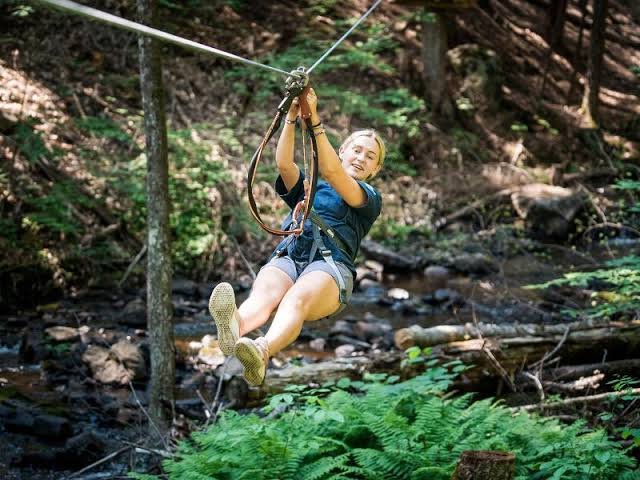
This summer, my friend (28nb) and I (29f) did a zip line obstacle course. We had both gone zip lining before and we had done obstacle courses like this before, but this time, for the first time, we did an extreme course, the biggest and hardest in our country.
For the first half of the course all was going well. We each had obstacles we struggled on but we always waited for eachother and helped eachother when needed. Until about halfway through, when my friend decided to call it quits.
They said they had pushed themselves as far as they could go, so I sat with them (just hanging in my harness) while we waited for someone to repel them down to the ground. Once they were safe on the ground, I told them I’d meet them at the end of the course, then we could do the regular zip lines if they were still up for it.
About 30 mins later, I finished the course and my friend said they still wanted to do the regular zip lines, so we did. Everything seemed fine then, but once we got in the car to go home, their tone shifted.
They told me it was selfish to continue the course while they just waited for me finish and I should’ve called it quits when they did. I apologized but also explained that I wasn’t going to quit something I had paid for (I also paid for their zip line fees), and that finishing that course was important to me.
Every summer I try do you at least one thing that scares me or seems too difficult. It’s an important part of my self esteem building, and my friend knows this. The course was also 3+ hours away, not something I wanted to drive twice for.
Since then, my friend has been avoiding me and bad mouthing me to mutual friends.
AITA for finishing the obstacle course instead of calling it quits when my friend did?
Edit to add: I think the comments about being embarrassed and jealous are spot on. For context, I’ve always been effortlessly skinny (thank you high metabolism), but I am definitely not what you would consider “fit”. I can barely do a pushup lol.
My friend however has always struggled with their weight, but also boasts about how fit and strong they are because they did kickboxing growing up. I wholeheartedly believe they’re more fit in a physical strength way, I just have more endurance.
“We Signed Up for an Extreme Course Together, But Only One of Us Finished”
I never expected an extreme outdoor course to cause a serious problem between me and one of my closest friends, but that is exactly what happened. A few months ago, my friend and I decided to sign up for a difficult endurance course that included long-distance hiking, climbing, obstacle sections, steep terrain, and several challenges designed to test both physical strength and mental endurance. Neither of us was a professional athlete, but we were both reasonably active and liked pushing ourselves. We had talked about doing something memorable together for a long time, and when we found this particular course, we immediately thought it would be perfect. We knew it wouldn’t be easy, but that was exactly why we wanted to do it. We imagined reaching the finish line together, exhausted and covered in dirt, and laughing about everything we had struggled through. At the time, I had no reason to believe that one of us would quit halfway through and then become angry because the other person continued.
We spent several weeks preparing for the course. We went on long walks, increased our running distance, worked on strength exercises, and tried to improve our endurance. We even watched videos from previous participants so we could understand what we were getting ourselves into. My friend was extremely confident during the preparation period. He constantly joked that we were going to destroy the course and that everyone else would probably be exhausted trying to keep up with us. I wasn’t nearly as confident, but I was excited. I knew there would probably be moments when I wanted to quit, so I mentally prepared myself for that possibility. We agreed that if either of us became injured or genuinely unsafe, we would stop and help each other. Otherwise, we would try our best to finish. I never understood that agreement to mean that if one person decided to quit, the other person would automatically have to quit too.
When the day of the course finally arrived, we were both excited and nervous. The starting area was packed with participants, and everyone seemed to have a different reason for being there. Some people were experienced athletes, while others were ordinary people looking for a personal challenge. The atmosphere made me even more determined. My friend was still joking around and acting confident. We took a few pictures before starting and promised each other that we would see each other at the finish line. At that moment, I genuinely believed we would. The first section was difficult but manageable. We had to move through uneven terrain while carrying some equipment, and the combination of distance and obstacles made it much more tiring than a normal hike. I could already tell that this was going to require more effort than our training had prepared us for.
After the first major section, my friend started slowing down. I asked if he was okay, and he said he was fine, just tired. I suggested that we take a short break, drink some water, and continue at a slower pace. He agreed. We rested for several minutes before continuing. For a while, everything seemed normal again. But after another difficult section involving steep climbing, he started complaining that his legs were completely exhausted. I told him we didn’t have to rush. There was no reason to race anyone, and we could take our time. He seemed frustrated with himself and kept saying that he couldn’t believe how difficult the course was. I tried to encourage him without making him feel pressured. I told him that everyone was struggling and that getting through it was more important than finishing quickly.
Eventually, we reached a point where my friend stopped completely. He sat down and said he didn’t think he could continue. I immediately asked whether he was injured. He said he wasn’t seriously injured, but he was exhausted and didn’t want to push himself any further. I told him that if he genuinely felt like stopping was the right decision, he should stop. I wasn’t going to pressure him into continuing because the course wasn’t worth risking his health over. I reminded him that quitting didn’t mean he was weak. Sometimes you reach a point where you know you have had enough. He nodded, but I could tell he was disappointed in himself. I stayed with him for a while and tried to make sure he was okay before deciding what I was going to do.
I eventually told him that I was going to continue. I made it very clear that I wasn’t angry with him for quitting. I simply still wanted to see if I could finish. He looked at me strangely and asked why I would continue without him. I said that I had signed up because I wanted to challenge myself, and that goal hadn’t changed just because he had decided to stop. He said he thought we were supposed to do it together. I agreed that I would have preferred to finish together, but I didn’t think one person’s decision had to determine what the other person did. I told him I would check on him when I finished and that I hoped he would be proud of himself for trying. He didn’t respond very enthusiastically. Instead, he told me to do whatever I wanted.
I continued alone, and the experience immediately felt different. Without someone beside me, I had nobody to talk to or encourage me, so I had to rely entirely on my own motivation. There were moments when I wondered whether I should turn around and quit too. My body was tired, and the course kept throwing new challenges at me. Every time I thought about stopping, I reminded myself why I had signed up. I didn’t need to beat anyone else. I didn’t need to prove that I was stronger than my friend. I simply wanted to know whether I could finish something that had seemed almost impossible when I first registered. That personal goal became even more important after my friend left because I didn’t want to quit simply because the person I had planned to finish with was no longer there.
The hardest section came several hours into the course. It involved a steep climb followed by a long stretch of difficult terrain. My legs were shaking, and I had to stop several times. I watched other participants struggle too, which actually made me feel better. Nobody looked fresh anymore. Everyone was covered in dirt and sweat, and some people were moving incredibly slowly. I realized that the course wasn’t about looking strong. It was about continuing even when you didn’t feel strong. That mindset helped me push through. I kept moving one section at a time instead of thinking about how much remained. Eventually, I reached the final obstacles, and for the first time that day, I genuinely believed I might actually finish.
When I crossed the finish line, I felt an overwhelming sense of relief. I wasn’t thinking about my friend at that exact moment. I wasn’t thinking about proving anything to anyone. I was simply proud that I had kept going when I wanted to stop. I was exhausted, but I was also incredibly happy. Someone near the finish line took a picture of me, and I later posted it on my social media with a simple caption about completing the course. I didn’t mention my friend. I didn’t say anything about him quitting. I didn’t compare our performances. I just wanted to celebrate something I had personally worked hard to accomplish. I honestly assumed my friend would see the picture and understand that I had been proud of myself, even though he hadn’t finished.
Instead, he messaged me later that evening and said he couldn’t believe I had posted the picture. I thought he was joking, so I asked what he meant. He said that seeing me at the finish line made him feel terrible about quitting. I told him I was sorry that he felt bad, but I didn’t understand why my finishing the course was a problem. He said that because we had signed up together, he thought I would stop when he stopped. I reminded him that I had stayed with him for quite a while and supported his decision. He had never asked me to quit with him, and even if he had, I wouldn’t have agreed. I told him that I didn’t post the picture to embarrass him. He responded that I should have considered how it would make him look.
That conversation caught me completely off guard. I could understand feeling disappointed after quitting something difficult. I could even understand feeling jealous for a moment when someone else succeeds at something you couldn’t complete. What I couldn’t understand was why he believed I had done something wrong by finishing. I asked him whether he wanted me to apologize for completing the course. He said that wasn’t exactly what he wanted, but he thought I should have kept the accomplishment private. According to him, posting the picture made it seem like I was proud that I had succeeded while he had failed. I told him that his interpretation wasn’t my intention. I wasn’t responsible for creating a negative meaning out of something that had never been directed at him.
The argument became worse when he accused me of turning the course into a competition. I reminded him that I had never raced him during the course. In fact, I had slowed down multiple times to stay with him. I had encouraged him when he was struggling and told him that it was okay to quit if he felt he needed to. Once he decided to leave, I continued because I still had a personal goal to finish. There was no scoreboard between us. There was no prize for being the stronger friend. He said that I didn’t understand because I had been the one who finished. I told him that maybe I didn’t fully understand how embarrassed he felt, but I wasn’t going to accept responsibility for his decision.
A few days later, some mutual friends became involved. My friend had apparently told them that I had abandoned him during the course and then bragged about finishing afterward. When I heard that description, I was honestly angry. I had not abandoned him. I had stayed with him when he was deciding whether to quit, made sure he was okay, and supported his choice. Once he was safely leaving, I continued with the activity I had paid for and trained for. I explained the situation to a couple of friends who asked what happened. I didn’t insult him or call him weak. I simply explained that we had made different choices when the course became too difficult.
Our mutual friends had mixed opinions. Some thought my friend was being unreasonable and said that he should be happy for me. Others believed I could have been more sensitive because he was already embarrassed about quitting. I understood that argument to a certain extent. Maybe I could have messaged him privately before posting the picture. Maybe I could have waited a few days. But nobody could explain why I was expected to hide my accomplishment indefinitely simply because another person had been disappointed in their own performance. If someone I cared about succeeded at something I had failed to do, I might feel disappointed in myself, but I wouldn’t expect them to stop celebrating their success.
Eventually, I decided that we needed to have a face-to-face conversation. Text messages were only making things worse because both of us were interpreting the other’s words negatively. We met at a quiet cafe and talked for a long time. I told him that I didn’t want the course to damage our friendship. I also told him honestly that I was hurt by the way he had reacted. I had considered him one of my closest friends, and I expected him to be happy for me even if he hadn’t been able to finish. He admitted that he had been embarrassed and frustrated. He said that during training, he had imagined himself finishing alongside me, and when he quit, he felt like he had disappointed himself.
That admission helped me understand where his anger was coming from. He wasn’t actually angry because I had finished. He was angry because my success forced him to face his own disappointment. He had imagined that we would both cross the finish line, and instead he had gone home while I continued. When he saw the picture, it reminded him of what he had wanted to accomplish. I told him that I understood those feelings, but he couldn’t turn them into a reason for me to feel guilty. His disappointment was real, but so was my achievement. Both things could exist at the same time.
He then said something that surprised me. He told me that part of him had expected me to quit after he left. I asked him why. He said that if I had quit too, then he wouldn’t have felt like he was the only one who failed. That was when I realized how much of the conflict came from comparison. He didn’t necessarily want me to fail, but he wanted us to have the same outcome so he wouldn’t feel alone. I told him that friendship doesn’t mean making sure both people always have the same results. Sometimes one friend succeeds while the other struggles. The important part is whether they can still support each other afterward.
I also admitted that I could have handled certain things better. I probably should have checked with him before posting the picture, especially because I knew he was disappointed. I didn’t have to hide the achievement, but I could have been more thoughtful about the timing. I apologized for unintentionally making him feel worse, but I also explained that I wouldn’t apologize for finishing. There is an important difference between saying, “I’m sorry that this hurt you,” and saying, “I’m sorry that I succeeded.” I wanted him to understand that I could care about his feelings without accepting blame for something that wasn’t wrong.
We eventually talked about whether we should try the course again together. My friend said he might want to attempt it again after training more. I told him I would happily help him prepare if he wanted. I even offered to sign up for a different challenge with him in the future. But I made one condition clear: if one of us quits, the other person should be free to continue without being accused of betrayal. He agreed that was fair. We both laughed a little because, looking back, our original understanding had been far less clear than we thought.
The more I thought about the situation, the more I realized that the course had exposed something that had probably been there in our friendship for a long time. We had always been competitive in small ways. We compared jobs, fitness goals, vacations, and even how quickly we learned new skills. Usually, it was harmless and gave us motivation. But there is a difference between healthy competition and feeling threatened by someone else’s success. I think my friend crossed that line because he started treating my achievement as evidence that he was somehow inferior. I didn’t want that kind of dynamic between us. I would rather encourage him to improve than constantly worry about making him feel bad whenever I accomplish something.
After our conversation, things slowly returned to normal. He eventually congratulated me sincerely, and I told him I appreciated it. We joked about how badly the course had destroyed both of us, even though technically I was the only one who finished. He admitted that he had overreacted after seeing the picture. I told him that I understood why he was upset, but I hoped he would learn to separate his own feelings from other people’s accomplishments. Nobody can build confidence by requiring everyone around them to fail whenever they do.
I still think about that day sometimes. The actual course was difficult, but the emotional part afterward was much more complicated. I expected my biggest challenge to be climbing hills, crossing obstacles, and fighting exhaustion. I never expected the real challenge to be figuring out how to handle a friend’s insecurity without sacrificing my own accomplishment. It taught me that supporting someone doesn’t always mean giving them the outcome they want. Sometimes the best thing you can do is respect their decision while continuing to follow your own path. I didn’t quit because my friend quit, and I don’t think that makes me a bad friend.
We’re still friends today, although I think the experience changed the way we approach competition. We both learned that if we’re going to challenge ourselves together, we need to make sure our expectations are clear. One person’s limit shouldn’t automatically become another person’s limit. If my friend wants to stop, I’ll support him. If I want to continue, I expect him to support me too. At the end of the day, I didn’t finish that course to prove that I was better than him. I finished because I had set a goal for myself and wanted to see it through. His decision to quit was his own, just as my decision to finish was mine. I hope we can both remember that friendship isn’t about always crossing the finish line together. Sometimes it’s about being happy for the person who makes it there, even when you’re still finding your own way.