My Husband Wants a Divorce After Years of Marriage
For years, I believed my husband and I had built a strong marriage. We had been together through difficult times, celebrated happy moments, and made countless memories that I thought would keep us connected forever. Like every couple, we had disagreements, but I never imagined that our relationship would reach a point where divorce would become a serious possibility. I always believed that no matter how difficult things became, we would find a way to work through them together.
At first, the changes in our marriage were small enough that I barely noticed them. My husband became quieter, spent more time on his phone, and seemed less interested in talking about his day. When I asked him if something was wrong, he would tell me he was tired or stressed about work. I accepted those explanations because I trusted him. I assumed he was going through a difficult period and needed some space, never realizing that he might be questioning our entire relationship.
As the months passed, I began to feel like we were becoming strangers living under the same roof. Our conversations mostly revolved around household responsibilities, bills, and everyday tasks. The affection we once shared seemed to disappear, and even sitting together in the evening felt different. I tried to bring back the closeness we had lost by suggesting date nights, preparing his favorite meals, and asking him to spend more quality time with me. Sometimes he agreed, but I could sense that his heart was no longer in it.
I eventually decided that we needed an honest conversation about our marriage. One evening, after dinner, I asked him directly whether he was happy with our life together. He looked uncomfortable and avoided answering at first. I told him I had noticed the distance between us and wanted to understand what was happening. I expected him to talk about his feelings, explain what was bothering him, or suggest ways we could improve things. Instead, he became unusually serious and told me that he had been thinking about our relationship for a long time.
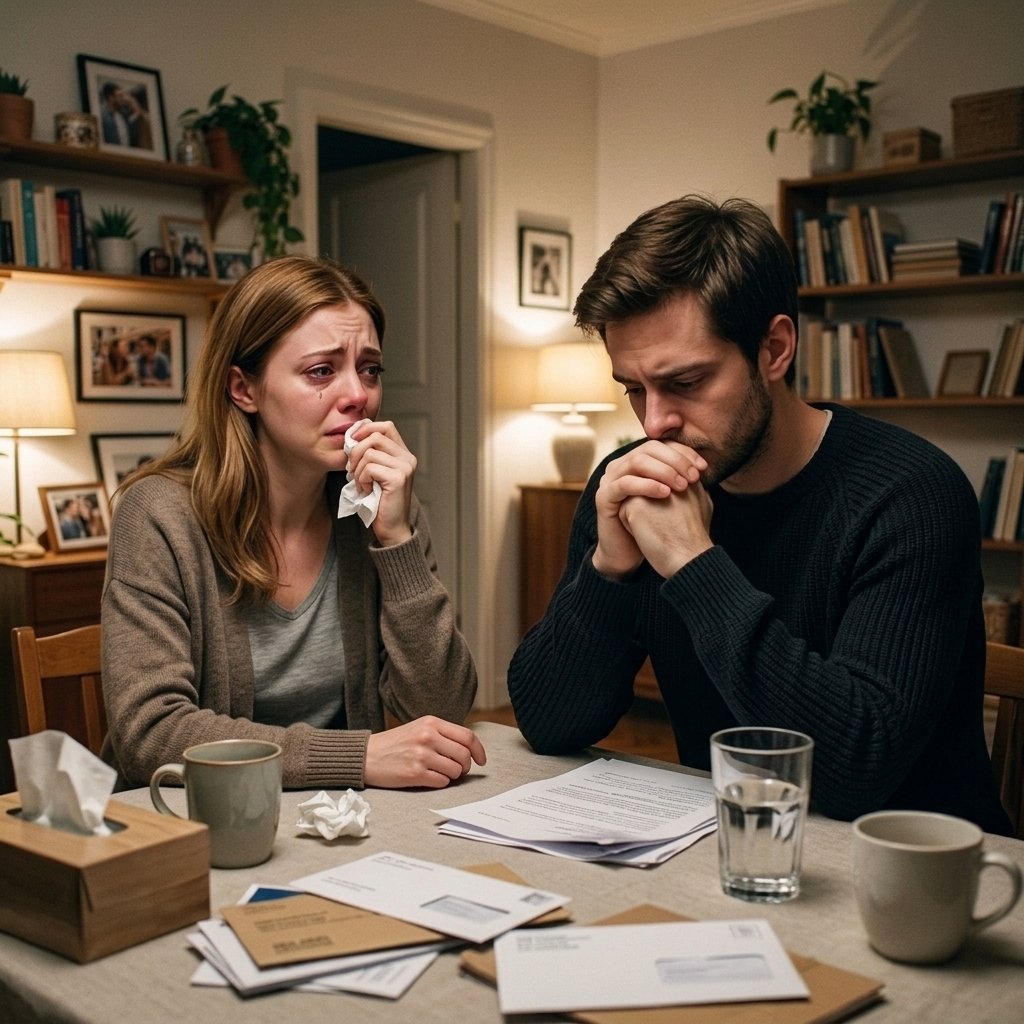
Then he said the words I never expected to hear: he wanted a divorce. For a moment, I couldn’t respond. I stared at him, hoping I had misunderstood what he was saying. We had spent years building a life together, and now he was telling me he wanted to walk away from it. I asked him why he had waited so long to tell me and whether something specific had happened. He explained that he no longer felt the same way about our marriage and believed we should separate rather than continue pretending everything was fine.
His explanation left me with more questions than answers. I wanted to know whether he had stopped loving me, whether there was someone else, or whether he had simply grown tired of the life we shared. He insisted that there was no single incident responsible for his decision. According to him, his feelings had changed gradually, and he had spent months trying to understand what he wanted. Hearing that was painful because I realized he had been struggling privately while I was still trying to save a marriage I thought we both wanted.
Over the following days, I found myself remembering everything we had experienced together. I thought about the sacrifices we had made, the challenges we had overcome, and the promises we had exchanged when we first got married. I wondered whether I had missed warning signs or whether there was something I could have done differently. Part of me wanted to beg him to reconsider, while another part felt angry that he had allowed our relationship to reach this point without having an honest conversation sooner. I knew that blaming myself for everything would not give me the answers I needed.
I asked him whether he would consider marriage counseling before making a final decision. I told him that I was willing to listen, acknowledge my mistakes, and work on the problems between us if he was equally willing to try. He said he understood why I wanted to explore that option, but he wasn’t sure counseling would change how he felt. That response hurt almost as much as the divorce announcement itself. I couldn’t force him to stay, and I couldn’t rebuild our marriage alone. For the first time in years, I had to consider the possibility that the future I had imagined might never happen.
Now I am trying to process what this means for my life and decide what steps I should take next. I still care about my husband, and accepting that our marriage may be ending is incredibly difficult. At the same time, I know that love cannot be sustained by one person’s efforts alone. I want to handle this situation with dignity, understand my legal and financial options, and give myself time to make thoughtful decisions rather than acting out of fear. I never imagined that the person I planned to grow old with would ask to end our marriage, but I am beginning to understand that even after years of shared memories, sometimes two people want different futures.
Read Story…
My Husband Told Me He’s Filing For Divorce Today
My Husband (34M) told me (32F) that he’s fed up and going to file for divorce. We’ve been married for 1 year, together for 4 years. He is very angry, and I feel depleted and numb.
Backstory: My husband suffers from a type of OCD called Relationship OCD otherwise known as Retroactive Jealousy. It is where he fixates on my past sexual relationships, particularly on one person, a person who I have not even spoken to in over 8 years.
He can get triggered anytime, anywhere. We could be watching TV and a character will have the same name and he will get triggered. Last weekend, we were at a concert celebrating our one year wedding anniversary and someone came on stage wearing a jersey that is for the same sport this person used to play. He wanted to leave the concert immediately, we ended up fighting and our anniversary was ruined.
Anytime he is triggered, his energy completely shifts from warm, goofy and loving to ice cold and bothered and he shuts me out. It is a very sad, confusing, frustrating and isolating experience for me and for him, it’s mental turmoil.
Pretty much every single fight we have had in our relationship has stemmed from his retroactive jealousy. Other than that, we’ve been extremely happy. Unfortunately, every time he gets triggered it chips away at my happiness. I walk on eggshells and feel anxiety sometimes because I never know when he will get triggered next.
I thought he might get better with time / after marriage because he would finally see that I want him and only him forever, I was wrong.
Ever since he was triggered on our anniversary last weekend and we fought, things have never been worse. Something feels different about this time, like I finally realized this isn’t going away or I’ve hit my breaking point. We’ve been cordial to each other all week and sleeping in the same bed but no sex.
Yesterday, he asked me if “I’m ready to go back to being loving again”. I told him my concerns and how he needs to seek support / medication for this RJ. I also thanked him for giving me space (which literally just meant not initiating sex) and he got an attitude and say “yea well I was upset too”.
It felt clear to me in this moment that he wasn’t really listening to me and to be fair, I sometimes have a difficult time seeing things from his side as well. Sometimes his aggressive approach and victim mindset in conversation makes me automatically defensive.
He ended up storming out of the room and slept in the guest room (where he always sleeps when he’s upset or for his everyday naps) and has been slamming every door he walks through ever since.
At this point, there is so much tension that I told him I will move his things from the master bedroom to the guest room so that we both can have space to process what we’re feeling.
He left for the day to go golfing, a new hobby he picked up that he has trashed for the last 4 years.. While he was away I moved his stuff. I did not move it to upset him, I truly feel broken and anxious when I’m around him now and just need a little space to process everything.
He came home from golf and was livid. He said he wasn’t interested in being roommates and this was no way to live. I told him once again that I need space to process everything and he said rudely “you’ve had enough space, you’ve had a week of space. Instead of moving my belongings all day you could have instead come up with a way to communicate.” I told him I did try communicating with him yesterday and he got upset. I told him that the way he is currently speaking to me is with an aggressive tone to which he replied “Because I’m angry! This is ridiculous. I won’t be married to someone who can’t resolve simple issues, I won’t have kids with that person, I’m filing for divorce.”
I responded that I don’t want a divorce all I am asking for is a little space for us to work through this. I don’t remember what he responded but he didn’t care that I said that and I think again he just repeated he was filing for divorce.
After he said that he left the house. The crazy part is I still don’t feel much? I don’t feel angry or sad, just numb. Perhaps I’m over it or it could be some kind of coping mechanism to protect myself.
I’ve never spoken to friends or family about his RJ because I love him and didn’t want them to think negatively about him. I think it’s finally time I open up to my mother about it. I feel very alone.
I’m not sure what to do or where to go from here. I’ve never been more in love with anyone in my life. He was caring, made me laugh, bought me flowers, supported me when I was laid off from my job, etc. but I am just not sure I can be in this relationship anymore now with how he’s acting. Not taking accountability, being rude to me and instead of giving me the space I need, threatening to divorce instead.
REDDIT: It would help to hear from you (an outside perspective) on this. I am too in it to think clearly at the moment. Even if no one responds, it felt nice to be able to type this out.
TL;DR: Husband has ROCD (retroactive jealousy) that causes most of our fights. After a bad trigger on our anniversary, he’s now threatening divorce because I asked for space, claiming I am incapable of solving issues. I feel numb and don’t know if this relationship is salvageable.
UPDATE: I am blown away at the amount of support this post has gotten. Thank you to everyone who has responded and to the mod of this post for giving me a great book recommendation. As many of you guessed, his threat of divorce was not real.
For the first time in 4 years I truly put my foot down and told my husband that I will no longer put up with this treatment. I told him that if he continues to choose not to seek help and instead continue to hurt me, then I’m not staying (and he knows I mean it). I told him I love him, but I love me and my mental health more.
Since this long conversation he has set up an immediate plan:
Daily plan:
- Morning reflection / meditation
- Medicine / Vitamins: Fluoxetine, magnesium, omega 3
- Workout
Weekly plan:
- Meet with therapist / start ERP (first session is scheduled for this weekend)
- Read 50 pages of self help books:
- The Art of Letting Go – read by 10/1
- The Happiness Trap – read by 10/1
- Overcoming Retroactive Jealousy – read by 10/15
- Brain Lock: Overcoming OCD – read by 10/30
I told him that I support him, but that he needs to do deep reflection and work on himself before we can start rebuilding our relationship. I plan on leaving town this week to spend some time with my mother and will be working on an exit plan to have just in case the day comes.
I have found a lot of strength and growth within myself throughout this process, and am very proud of myself.
I can’t describe how it felt going from feeling so isolated and alone to feeling like I have a community who supports me through this post. So if you’re scrolling and see someone who needs help, just know that your comment can make a big difference. <3
I Never Imagined My Husband Would Want a Divorce After Years of Marriage
I never imagined that I would find myself questioning the future of my marriage after spending so many years building a life with the man I loved. When I married my husband, I genuinely believed we would grow old together, support each other through every challenge, and remain partners no matter what life threw at us. We had shared beautiful memories, difficult moments, and countless ordinary days that slowly became the foundation of our relationship. I knew marriage was not always easy, but I believed that love, trust, and communication could help us overcome almost anything. That is why hearing my husband say he wanted a divorce felt like the ground had suddenly disappeared beneath my feet.
For a long time, I thought our marriage was going through a normal rough patch. We both had responsibilities, work-related stress, and everyday problems that sometimes made it difficult to spend quality time together. There were evenings when we barely spoke beyond asking what we wanted for dinner or discussing household chores. Although I noticed that our relationship had become less affectionate, I assumed it was something many long-term couples experienced. I told myself that once things became less stressful, we would naturally reconnect. I never considered that my husband might be quietly thinking about ending our marriage while I was still hoping things would improve.
The first changes I noticed were small. My husband stopped asking about my day as often as he used to, and conversations that once lasted for hours became brief exchanges. He seemed distracted whenever I tried to tell him something important, and he frequently checked his phone while we were sitting together. Sometimes I would ask him whether something was bothering him, but he always gave me a vague answer. He said he was tired, stressed, or simply had a lot on his mind. Because I trusted him, I accepted those explanations and tried not to pressure him. Looking back, I wonder whether he was already emotionally distancing himself from me.
I tried to make our home feel warm and comfortable because I believed that spending more time together might help us reconnect. I cooked meals he enjoyed, suggested watching movies together, and occasionally planned little activities we used to love. In the past, even a simple evening at home could make us feel close. We would laugh about silly things, discuss our plans, and talk about the future. Recently, however, those moments felt increasingly one-sided. He would sometimes participate, but his attention seemed to be somewhere else. I tried not to take it personally, although deep down I was beginning to feel lonely in a relationship that was supposed to make me feel loved.
Eventually, I decided I could no longer ignore the distance between us. One evening, after we had finished dinner, I asked him if we could sit down and have an honest conversation. I explained that I felt something had changed and that I wanted to understand what was happening. I was careful not to accuse him of anything because my goal was to find a solution, not start an argument. I told him I missed the connection we once shared and wanted to know whether he felt the same way. At first, he remained quiet and looked uncomfortable. Then he sighed and said there was something important he needed to tell me.
When he finally spoke, his words were so unexpected that I struggled to understand them. He told me he had been thinking about our marriage for a long time and believed we should get divorced. For several seconds, I simply stared at him. I waited for him to explain that he was overwhelmed or that he had spoken out of frustration, but he did not take his words back. He looked serious, almost as though he had rehearsed the conversation before bringing it up. I asked him whether he was genuinely saying that he wanted to end our marriage. He quietly confirmed that he was.
My first reaction was disbelief. We had been through so much together, and I could not understand how he had reached such a major decision without me realizing how unhappy he was. I asked him when he had started feeling this way and why he had not talked to me earlier. He explained that his feelings had changed gradually and that he had spent months thinking about what he wanted. According to him, he no longer felt connected to our marriage in the way he once had. Hearing that was devastating because I realized that while I had been trying to improve our relationship, he had been considering whether he wanted to remain in it at all.
I asked him whether there had been a particular incident that caused him to feel this way. Had I said or done something that hurt him? Had we become too comfortable with each other and stopped making an effort? Was there a problem he had been afraid to discuss? I wanted something concrete that I could understand, even if the truth was painful. He told me there was no single event that had led to his decision. Instead, he felt that we had gradually grown apart. That explanation left me confused because growing apart sounded like something we could have addressed if we had both recognized it and worked together.
The conversation quickly became emotional. I admitted that I had noticed the distance between us, but I had assumed we could fix it by communicating more honestly. I told him that I still loved him and did not want to throw away years of marriage without at least exploring our options. I was not asking him to pretend that everything was perfect. I simply wanted us to acknowledge our problems and determine whether they could be resolved. He listened, but I could not tell whether my words made any difference. His calmness frightened me because I was struggling to process the possible end of our relationship while he appeared to have already considered the decision.
After that evening, our home felt completely different. We continued doing the ordinary things we had always done, but there was an uncomfortable awareness between us. Every conversation seemed to carry a hidden meaning, and I found myself wondering whether each ordinary moment might be one of our last as a married couple. When he left for work, I wondered whether he was thinking about the divorce. When he returned home, I wondered whether he would bring up the subject again. I tried to behave normally, but it became increasingly difficult to concentrate on everyday responsibilities while facing the possibility that my entire future was about to change.
I also began remembering the early years of our relationship. I thought about how excited we had been when we first started dating, how easily we used to make each other laugh, and how certain we had felt about our decision to get married. We had once discussed our dreams as though we would experience every important milestone together. We imagined future holidays, a comfortable home, and the happiness that would come from growing older side by side. Those memories were beautiful, but they were also painful because I could not understand how the relationship that had once felt so secure had reached a point where my husband wanted to leave.
For several nights, I struggled to sleep properly. My mind kept returning to the same questions, and I repeatedly replayed our conversations to see whether I had overlooked something important. I wondered whether I had become too focused on responsibilities and had not paid enough attention to his emotional needs. I questioned whether our routine had replaced the excitement we once shared. At the same time, I reminded myself that a marriage involves two people, and I could not reasonably accept responsibility for every problem without understanding his perspective. I wanted to learn from the situation, but I did not want to turn my confusion into endless self-blame.
A few days later, I asked him whether he would consider marriage counseling before making a final decision. I explained that counseling would not guarantee that we stayed together, but it might help us understand how we had reached this point. Even if we ultimately separated, I wanted us to have an honest conversation with someone who could help us communicate more effectively. He said he understood why I was asking, but he was unsure whether counseling would change anything. His response hurt because I had hoped he would at least be willing to explore the possibility. Still, I tried to remain calm and told him that I needed to know whether he was completely unwilling to work on our relationship.
He eventually admitted that he was uncertain about counseling because he did not want to give me false hope. He said he had spent a considerable amount of time thinking about divorce and did not want to promise that he could regain the feelings he once had. I appreciated his honesty, but the words were difficult to hear. I wanted to believe there was still a way forward, yet I also knew that forcing someone to remain in a marriage would not create genuine love. I had to begin separating my desire to save our relationship from the reality that my husband might no longer want the same future.
One of the hardest parts was dealing with the difference between how I felt and how he appeared to feel. I was grieving a future that had not even disappeared completely yet, while he seemed focused on what would happen next. Sometimes he behaved normally, and those moments gave me a little hope. We would discuss an ordinary household matter or share a brief conversation, and I would wonder whether perhaps he was reconsidering. Then the subject of divorce would return, reminding me that our relationship was facing a serious crisis. The uncertainty was exhausting because I did not know whether to prepare myself for separation or continue hoping that we might find a way to repair our marriage.
I eventually decided to speak with someone I trusted about what was happening. I had kept much of my pain to myself because I did not want other people interfering in our relationship or judging my husband before understanding the full situation. However, carrying everything alone had become overwhelming. Talking about my feelings helped me recognize that I needed emotional support regardless of what happened to my marriage. I did not need someone to tell me that my husband was a terrible person or that I should immediately give up. I needed someone who could listen, acknowledge how painful the situation was, and remind me that my life still had value even if my marriage ended.
My trusted confidant encouraged me to consider whether our marriage had been meeting both of our emotional needs. That question was difficult because I had focused so much on the possibility of losing my husband that I had barely considered my own happiness. I realized there had been times when I felt lonely, unheard, or uncertain about where we stood. I had dismissed those feelings because I believed that long-term relationships naturally became less exciting. Perhaps we had both become so accustomed to our routine that we had stopped making a genuine effort to understand each other. Recognizing that possibility did not make divorce easier to accept, but it helped me see that our problems deserved a more honest examination.
I also began thinking about the practical consequences of a possible separation. Divorce was not simply an emotional decision; it could affect our living arrangements, finances, shared responsibilities, and future plans. We had built a life together, and untangling those parts of our lives would require careful thought. I did not want to make rushed decisions while I was feeling overwhelmed. Instead, I started considering which documents and financial records I might need to understand our shared situation. I also recognized that getting independent legal advice could help me understand my rights and responsibilities before agreeing to any arrangements. Preparing myself did not mean I had stopped caring about my marriage. It meant I was trying to protect my future.
When I spoke to my husband again, I asked him to explain what he imagined our lives would look like if we divorced. I wanted to know whether he had already considered practical arrangements or whether he was still trying to work through his feelings. He explained that he wanted us to approach the situation as calmly as possible and avoid turning it into a bitter conflict. I agreed that neither of us would benefit from unnecessary hostility. However, I also told him that being calm did not mean I was not hurt. I needed time to process what he was saying, and I needed him to understand that I could not immediately behave as though nothing significant had happened.
At one point, I asked him whether he still loved me. It was a simple question, but asking it felt terrifying because I was afraid of the answer. He paused before responding and said that he still cared about me, but he did not feel the same way about our marriage. I struggled to understand the distinction. How could someone care about the person they had shared so much with and still decide that the relationship should end? Eventually, I realized that caring for someone and wanting to remain married to them are not always the same thing. That realization was painful, but it helped me understand that affection alone might not be enough to rebuild the partnership we had lost.
I asked whether he had developed feelings for someone else, because the uncertainty was beginning to consume me. I did not want to accuse him without evidence, but I also needed clarity about whether there was another person involved. He told me that his decision was not about another relationship and that he had been questioning our marriage independently of anyone else. I could not know every thought he had kept to himself, but I decided that repeatedly searching for a hidden explanation would not necessarily give me peace. If there were facts I needed to know, I would address them directly. Otherwise, I needed to focus on the information he was willing to share and the choices available to me.
As the days passed, I noticed that I was slowly becoming more aware of my own needs. I still loved my husband, and I still wished that our marriage could recover, but I no longer wanted to spend every moment trying to persuade him to stay. I wanted a relationship in which both people chose each other willingly. I wanted honest communication, affection, respect, and a shared commitment to resolving problems. If we could rebuild those things together, I would be willing to explore that possibility. If he had genuinely decided to leave, however, I would eventually have to accept that I could not create a healthy marriage through my efforts alone.
I also began to understand that accepting the possibility of divorce did not mean I had to stop loving him overnight. Feelings do not disappear simply because circumstances change. I could miss the person he had been, treasure the memories we had made, and still acknowledge that our relationship was in trouble. I could feel angry about the way things had unfolded without allowing anger to determine every decision I made. Most importantly, I could grieve without treating my grief as proof that I was incapable of moving forward. The end of a marriage, if that was what happened, would be a significant loss, but it would not erase the experiences or lessons that had shaped my life.
Eventually, I told my husband that I was willing to have one more serious conversation about our options. I asked him to be completely honest about whether he was prepared to make a genuine effort to repair our marriage. I explained that I did not expect an immediate return to the way things had been, but I needed to know whether we shared even a small willingness to work toward something better. If he wanted counseling, I would participate. If there were specific concerns he had never expressed, I was prepared to listen. But if his decision was final, I asked him to tell me clearly rather than leave me waiting indefinitely for a change of heart.
His answer was difficult because he said he did not want to make promises he might not keep. He acknowledged that our years together mattered to him, but he still believed separation might be the right choice. I listened carefully, even though part of me wanted to argue against every reason he gave. I realized that another emotional conversation would not necessarily change his mind. What I needed now was clarity, not endless uncertainty. I told him that I would respect his right to make his own decision, but I also had the right to make decisions that protected my emotional well-being and future. I would not force him to stay, and I would not abandon my own needs simply to keep the marriage intact.
That conversation changed how I approached the situation. I stopped treating every quiet evening as an opportunity to convince him to reconsider and began giving myself space to think. I made an effort to maintain my daily routine, spend time with supportive people, and take care of responsibilities I had neglected while worrying about our relationship. Some days were easier than others. There were moments when an old photograph or a familiar song brought back memories that made me cry. Other days, I felt surprisingly calm and could imagine a future that looked different from the one I had planned. I learned that healing was not a straight line and that I did not have to resolve every emotion immediately.
I still hope that we can approach this situation with kindness and honesty. If there is a genuine opportunity to rebuild our marriage, I want it to be based on mutual effort rather than fear, guilt, or pressure. I want both of us to understand what went wrong and whether we are willing to make the changes necessary to move forward. But I am also preparing myself for the possibility that we will separate. That means seeking appropriate advice, understanding our financial situation, and thinking carefully about the arrangements that would affect our lives. I do not want to turn our shared history into a battle. I want to handle whatever comes next with as much fairness and dignity as possible.
Looking back, I wish we had talked more openly about our feelings before things reached this point. Perhaps some of our problems could have been addressed earlier, or perhaps our relationship would still have faced the same challenges despite our efforts. I cannot change the conversations we avoided or the moments when we failed to understand each other. What I can do is learn from this experience and become more honest with myself about what I need from a relationship. I have learned that years spent together do not automatically guarantee that two people remain emotionally connected. Love requires attention, communication, and a willingness to address problems before silence turns them into something much larger.
For now, I am taking things one day at a time. My husband wants a divorce after years of marriage, and I am still struggling to accept what that could mean for the life we built together. I do not know whether our story will end in separation or whether we will find a way to rebuild the connection we have lost. What I do know is that I cannot make that decision for both of us. I can communicate honestly, consider counseling, seek advice, and protect my future while giving myself permission to feel whatever comes. I never imagined that I would face this situation, but I am beginning to understand that even when a relationship changes beyond recognition, I still have choices about how I respond. If you were in my position, would you keep trying to save the marriage, or would you begin preparing to move on when your husband says he wants a divorce?