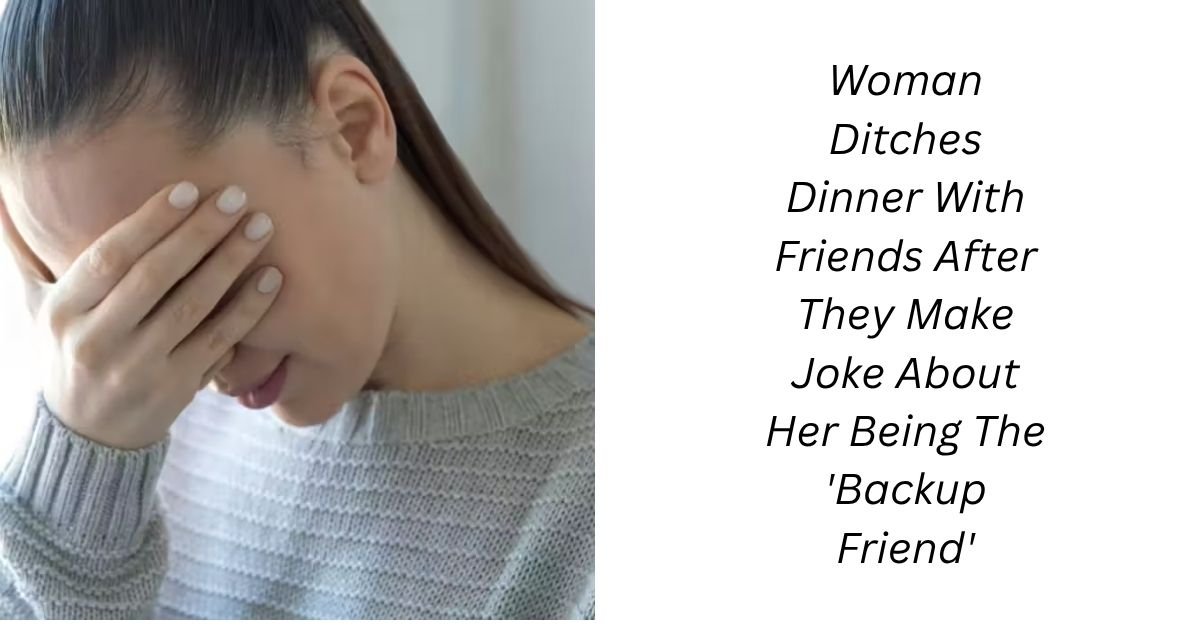
Woman Ditches Dinner With Friends After They Make Joke About Her Being The ‘Backup Friend’
When this woman agreed to meet her friends for dinner, she expected the evening to be relaxed, fun, and a chance to catch up with people she cared about. She had always considered the group to be close, even though everyone had busy schedules and different priorities. She understood that friendships could change over time, but she still believed there was mutual respect between them. She arrived at dinner expecting laughter and good conversation, but the mood changed when the discussion turned toward their friendships and social plans. During the conversation, one of her friends made a joke suggesting that she was the group’s “backup friend.” At first, the woman wasn’t sure whether she had heard correctly. She tried to laugh along because she didn’t want to make the situation awkward, but the comment stayed in her mind. What bothered her wasn’t simply the phrase itself. It was the possibility that her friends genuinely saw her as someone they contacted only when their preferred plans didn’t work out.
The woman later explained that she had noticed certain patterns in the friendship for a while. She sometimes felt that she was invited to events at the last minute, especially when someone else couldn’t attend. There were occasions when plans seemed to happen without her, only for someone to message her afterward and ask whether she wanted to join. She had tried not to take those situations personally because she knew adults had different schedules and responsibilities. She also didn’t want to become the friend who constantly complained about not being included. However, hearing someone openly describe her as the “backup friend” made all of those previous experiences suddenly feel different. What she had previously dismissed as coincidences now seemed like part of a pattern. She began wondering whether the friendship had always been one-sided and whether she had been making excuses for people who didn’t value her as much as she valued them.
As the dinner continued, the woman became increasingly uncomfortable. Her friends apparently treated the comment as harmless teasing and expected everyone to laugh about it. From their perspective, it may have been nothing more than an inside joke. They might have believed that close friends should be able to joke with one another without taking every comment seriously. But the woman didn’t find it funny because it touched on an insecurity she had already been struggling with. Instead of feeling included at the dinner, she suddenly felt like an outsider sitting at the table. She began questioning whether she was only there because another friend had canceled or because someone else had become unavailable. Rather than starting an emotional confrontation in the middle of the restaurant, she decided that she didn’t want to remain there. She quietly excused herself and left the dinner, believing that staying would only make her feel worse.
After leaving, the woman received mixed reactions from the group. Some friends apparently thought she had overreacted and argued that everyone knew the comment was a joke. They said that walking out of dinner over one sentence was unnecessary and that she should have simply laughed it off. Others understood why she was hurt and believed the friends should have realized that calling someone a “backup friend” could be deeply insulting. The woman herself struggled with whether she had handled things correctly. She knew that leaving without explaining everything might have surprised her friends, but she also felt that she needed some distance before saying something she might regret. She wasn’t trying to punish anyone or create drama. She simply didn’t want to sit through an entire dinner pretending everything was fine when she suddenly felt embarrassed and unwanted. For her, the comment wasn’t funny because it seemed to confirm fears she had quietly carried for a long time.
Ultimately, the situation forced the woman to reconsider what she expected from friendship. She realized that being included isn’t enough if the people around you make you feel like an option rather than a priority. At the same time, she understood that friendships aren’t always perfectly balanced, and people can sometimes make insensitive jokes without realizing how deeply their words might hurt someone. The real question was whether her friends would take responsibility after learning how the comment affected her. If they apologized sincerely and showed her through their actions that she was genuinely valued, the friendship might still have a future. But if they continued dismissing her feelings and insisted that she was simply “too sensitive,” she would have to decide whether maintaining those friendships was worth the emotional cost. What started as an ordinary dinner ultimately became a moment of clarity for the woman. She wasn’t necessarily asking to be everyone’s first choice all the time. She simply wanted to know that when her friends invited her somewhere, they actually wanted her there—and weren’t treating her as a convenient replacement whenever someone else couldn’t make it.
Read Story…
“AITA for leaving a dinner early after my friends made a joke about me?”
The original poster (OP) explained:
“I’m 23, female, and I went out for dinner with four of my friends last weekend. We’ve all known each other for a while, so we’re pretty comfortable making fun of each other.”
“At some point they started talking about how everyone in the group has changed since college. It was mostly harmless until one of them said I was basically the ‘backup friend’ of the group because I’m always available when everyone else is busy.”
“Everyone laughed, including me at first, because I didn’t want to make it awkward. Then another friend said, ‘She’s not even offended because she knows it’s true’.
“They started bringing up random times when I’d been left out of plans and joked that I was basically the person they called when someone cancelled. I laughed it off at the table, but honestly it really got to me.”
“I ended up making an excuse that I wasn’t feeling well and left early. Later that night, one of them texted asking why I was being weird. I told her that the jokes actually hurt my feelings, especially because some of what they were joking about was true.”
“She said I was taking a joke way too seriously and that nobody actually thinks I’m a backup friend.”
“I told her that if that’s true, they probably shouldn’t joke about something they know I’m insecure about. She said she didn’t even know I was insecure about it and now everyone is apparently annoyed that I ‘made the whole dinner awkward’.”
“I haven’t talked to them much since. Part of me thinks I should’ve just laughed it off because they weren’t trying to hurt me, but another part of me feels stupid for pretending I was fine when I wasn’t.”
Redditors weighed in using the AITA voting acronyms:
- NTA – Not The A**hole
- YTA – You’re The A**hole
- NAH – No A**holes Here
- ESH – Everyone Sucks Here
- INFO – more information needed
Redditors decided the OP was not the a**hole (NTA).
“Them basically pointing out times that they’ve deliberately excluded you is not a joke. Real friends at least ask if you can come every time.” ~ Electronic_Count_349
“Sometimes leaving is the most peaceful response. No yelling, no drama, just ‘yeah I’m done with this and going home’.” ~ petalsandtea
“Just get friends. Because these people aren’t friends. Glad you got outta there and made them persona non grata. F that noise. You’re better than that mess. They aren’t.” ~ EggsceIlent
“Real friends don’t leave you out deliberately and laugh in your face about it. In the really real world, we call those people bullies.” ~ lldavids44
“Sorry, that’s a sh*t thing to find out. They will likely try to relieve their conscience by reaching out to you in some way. I would guess that the best way to protect yourself is to ignore them from here on out. You owe them nothing. NTA.” ~ Creative_Piano_4647
“In my experience, bullies will usually get mad at you for standing up for yourself. It’s so bizarre, but they can’t stand to be embarrassed or held accountable.”
“But yes, ghost the sh*t out of them if they try.”
“By the way, OP, we know nothing about you from their conversation; we only know everything we need to know about them. Brava, my dear! They suck. You seem like a sweetheart and can do so much better.” ~ Practical_Tap_9592
“This internet stranger is proud of you, OP. They don’t deserve you. Don’t let them try to convince you to come back either.”
“I’ll bet you also helped them financially or paid more than your share at times. And the friendships were one-sided. Remember that.You deserve reciprocal friendships with people who value your time, effort, and attention.” ~ km4098
“NTA. Saying I was ‘teasing’ or ‘joking’ when saying hurtful things is just a bully’s way of trying to diminish the hurt they caused you and to ease what little conscience they have by making it about your ‘over’ reaction.”
“OP: you will be better off without those ‘friends’. Loneliness can suck, but it is better than what they did to you.” ~ Area51Resident
“Classic gaslighting and DARVO so they don’t have to take any accountability for their sh*t behaviour. OP is so much better off without such toxic, frenemy weirdos draining their energy.” ~ Busy-Bat9145
*DARVO:
- Deny
- Attack
- Reverse Victim and Offender
“They consider you a B-list friend. That’s not a joke even though you laughed. Not because it was funny (it wasn’t) but because you didn’t want to make things awkward.”
“Next time they invite you as a stopgap (and they will, because they don’t take you seriously; they even said that in front of you), you can say you have other plans, such as watching grass grow.”
“Every plan is an A-ctivity that takes priority over B-list invitations. Find other friends.” ~ SpiritedLettuce6900
“You should stir the pot and ask ‘I wonder which one of you is going to be the backup friend now?’ Then block them all.” ~ ElectricalGrape5439
“Good for you! I can still remember a moment, almost 30 years ago at this point, where I called a friend and his dad answered, and I could hear the friend say ‘why did you tell her I was home?’ and the dad said something I couldn’t hear, and then the friend got on and said ‘Did you hear that?’.”
“I lied and said I didn’t, but to this day I wish I had hung up the phone on them instead.”
“Honestly, I’m proud of you for getting yourself out of that toxic environment. Stay strong. You will find people who enjoy your presence and don’t joke about these things.” ~ secret_identity_too
“Proud of you OP! And I promise that when you look back on this in 10 years, you will be proud of yourself, too.” ~ SparrowValentinus
“Sad truth is you were their friend, but they weren’t yours. It’s a painful realization, but I’ve been there and I’m happier now and now I only put in effort where I feel effort back.” ~ Darth-Adomis
“Instead of her telling you ‘you made the whole dinner awkward,’ they should be apologizing to you. Glad you’ve dropped out of the ‘mean girls’ circle. You’ll find kinder friends elsewhere.” ~ lifegoeson5322
“It might not be much, but this internet stranger is proud of you too. Yes, realizing people weren’t true friends sucks, but think about it this way, you just opened up (3?) vacancies to find new friends who actually want to be in your life.”
“The early 20s suck for friendships because we lose a lot of our schooling friends, but we lose them because we are starting a new chapter in our lives (the rest of our lives), and we realize they won’t have a positive impact on who we are becoming.”
“Use this free time to focus on yourself and who you want to be moving forward. It’s a lot like a break up. Get to know yourself, join a club or two, and make some new friends.” ~ Environmental_Art591
“They weren’t just teasing her; they were listing actual exclusion and expecting her to laugh along.” ~ FutureVersion6567
“I can’t bear the ‘it’s just a joke’ thing when the joke is about something that’s true. It makes no sense. If you have a friend with ginger hair and you make a joke about them having ginger hair, you can’t say ‘it was just a joke, nobody actually thinks you have ginger hair’. That’s not what a joke means!” ~ BritishHobo
“Yep. It’d be one thing if a couple of them had a best friend in the group who wasn’t OP, and they had a habit of planning a two-person event and having OP be the second friend to fill in when the best friend fell through, but if the group as a whole is talking about regularly leaving OP out of actual group events… it’s a very different scenario.”
“I’ve been the backup friend before. It doesn’t get better with time—quite the opposite. You’re better off alone than with friends like that.” ~ Nyzer_
“They were saying, ‘we were mean to you repeatedly until you left—you really made things awkward’.”
“You hear how that sounds now, right?”
“NTA. You don’t need just better friends. You need real friends. Ditch the college bitches and start fresh.” ~ dryadduinath
“I think with people like these, it’s actually wiser to not start an argument. That’s just gonna make OP feel more like sh*t when these ‘friends’ inevitably gang up on her and start berating her right at the restaurant.”
“You’re not gonna convince them they’re wrong, and their opinions are worthless, so there’s no point anyway.”
“OP got herself out of there and decided to drop these people. That’s a perfectly good way to handle that.” ~ metrometric
OP responded after receiving their feedback.
“I read all your comments, and I want to thank each one of you for your positive and friendly comments. I am not friends with them anymore and will rebuild my life from now on and focus on my mental health. Much love, everyone.”
Reddit decided OP needed better friends, and they took that advice.
It’s sad to lose friends, but some friendships always had an expiration date.
Woman’s Fun Dinner With Friends Takes An Unexpected Turn After Hurtful Comment
When this woman agreed to meet her friends for dinner, she expected the evening to be a normal opportunity to relax, catch up, and spend time with people she considered close friends. She wasn’t expecting anything dramatic or emotionally difficult to happen. Like many people, she had a busy life and didn’t always get to see everyone as often as she wanted. That was why she looked forward to the dinner. She believed that even if everyone couldn’t always stay in touch, the friendship itself was still meaningful. She arrived at the restaurant ready to have a good time, but one comment during the conversation quickly changed the way she viewed the entire evening.

Advertisement
The group was talking casually about their friendships, social plans, and the different people they spent time with. At some point, one of the friends made a joke about the woman being the group’s “backup friend.” The comment may have been intended as harmless teasing, but it immediately caught her off guard. She tried to laugh along because she didn’t want to make the table uncomfortable. However, she couldn’t stop thinking about what the comment actually implied. If she was truly their “backup friend,” then perhaps she wasn’t as important to them as she had believed.
The woman had always tried to be understanding when her friends were busy. She knew that people had jobs, relationships, family responsibilities, and other commitments. She didn’t expect to be invited to every event or included in every plan. Whenever her friends canceled or made plans without her, she usually told herself that it wasn’t personal. She assumed they simply had other things going on. But hearing the words “backup friend” made those previous situations look different.
Suddenly, she began remembering several occasions when she had been invited somewhere only after another person canceled. There had been times when friends contacted her at the last minute and asked if she was available. She had never thought much about it before because she was happy to spend time with them. She didn’t want to keep score or analyze every invitation. But now she wondered whether she had been interpreting their behavior too generously.
The woman also started thinking about how often she initiated plans compared with her friends. She realized that she was frequently the one sending messages, suggesting restaurants, checking everyone’s schedules, and trying to keep the friendship active. Her friends usually responded positively, but she couldn’t remember the last time they had gone out of their way to make plans specifically with her. The joke made her question whether the friendship had become more important to her than it was to them.
At the dinner table, her friends apparently continued treating the comment as a joke. They may have expected her to laugh and move on. From their perspective, it might have been nothing more than playful teasing between people who knew each other well. They may not have realized that the comment touched on a genuine insecurity. The woman, however, couldn’t separate the joke from the experiences she had already had with the group.
She didn’t want to cause a scene in the restaurant. She also didn’t want to accuse everyone of being bad friends without first thinking carefully about what had happened. Rather than immediately confronting the person who made the comment, she became quieter. She listened to the conversation but no longer felt comfortable participating in it. The excitement she had felt when she arrived had disappeared, and she found herself wishing she could simply go home.
Eventually, the woman decided that she didn’t want to spend the rest of the evening sitting at a table where she felt unwanted. She politely excused herself and left. She didn’t make a dramatic speech or insult anyone. She simply decided that she needed some distance from the situation. For her, leaving wasn’t about getting attention. It was about protecting herself from spending several more hours pretending that a hurtful comment hadn’t affected her.
After she left, the reactions from her friends were mixed. Some reportedly thought she had completely overreacted. They argued that everyone knew the comment was a joke and that she should have understood the humor. They felt that walking out of dinner over a few words was unnecessary. According to them, close friends should be able to tease each other without every joke becoming a serious argument.
The woman saw things differently. She believed that a joke can still hurt someone, even if the person making it didn’t intend to cause harm. She also felt that the word “backup” carried a very specific meaning. It suggested that she was only useful when someone else wasn’t available. That was not how she wanted to be viewed by people she considered close friends. She wasn’t demanding to be everyone’s best friend, but she expected basic respect.
One of the things that hurt her most was that the joke was made in front of the entire group. If someone had privately told her that she sometimes seemed like a backup option, she could have had a serious conversation about it. But hearing it casually announced at dinner made her feel embarrassed. She wondered whether the others had already discussed her this way when she wasn’t around.
The situation also made her question whether she had ignored warning signs. She remembered moments when plans had changed without her, group chats where she wasn’t included, and occasions when she learned about gatherings afterward. At the time, she had always found an explanation. Maybe someone forgot to invite her. Maybe the event was spontaneous. Maybe everyone assumed she was busy. Now, however, she wondered whether the simplest explanation was that she simply wasn’t a priority.
At the same time, the woman recognized that friendships don’t have to be perfectly equal. People naturally become closer to certain friends at different stages of life. Someone may have a best friend they speak to every day while maintaining other friendships that are less frequent. She wasn’t angry because she wasn’t someone’s number-one friend. What bothered her was being openly labeled a backup. There was a difference between being a secondary friend and being treated as a replacement.
She also wondered whether the friend who made the joke realized how serious the comment sounded. Sometimes people say things without thinking about how they will be received. What one person considers harmless humor can be deeply personal to someone else. If the friend had immediately apologized and acknowledged that the joke was insensitive, the situation might have been resolved much more easily.
Instead, the woman felt that some of her friends focused more on defending the joke than understanding her reaction. They told her she was being too sensitive and should learn to take a joke. That response made her even more uncomfortable. She believed that friendship should allow someone to say, “That hurt me,” without being immediately dismissed.
The woman began considering whether she should confront the group directly. She wanted to explain why the comment affected her and ask whether they genuinely viewed her as a backup option. At the same time, she was afraid of hearing an honest answer. If they told her that the joke was actually based on how they saw her, she would have to accept that her understanding of the friendship had been wrong.
She eventually realized that avoiding the conversation wouldn’t necessarily solve anything. If the friendships mattered, an honest discussion could give everyone a chance to explain themselves. Maybe the comment really was just a thoughtless joke. Maybe her friends had no idea she felt excluded. Or perhaps the joke revealed something that had been obvious to everyone except her. Either way, she needed clarity rather than continuing to guess.
The incident also taught her something about her own boundaries. She realized that she had spent a lot of time accepting situations that made her uncomfortable because she didn’t want to seem difficult. She often stayed quiet when plans changed or when she felt left out. She told herself that good friends were supposed to be understanding. But being understanding didn’t mean she had to ignore her own feelings indefinitely.
Some people who heard about the situation believed she should simply find new friends. They argued that anyone who calls someone a “backup friend” doesn’t deserve their friendship. Others felt that ending a friendship over one joke was too extreme. They believed the better approach would be to have a conversation and see whether the group understood why she was hurt. Both perspectives had some merit because the future of the friendship depended heavily on what the friends did next.
The woman herself wasn’t certain that she wanted to end the friendships. She still cared about these people and had shared many good memories with them. She didn’t want one uncomfortable dinner to erase years of friendship. However, she also knew that continuing a friendship while constantly wondering whether she was valued would be emotionally exhausting. She needed her friends to show through their actions that she mattered.
Ultimately, the situation wasn’t really about one dinner or one joke. It was about belonging. The woman wanted to feel that when her friends invited her somewhere, they actually wanted her there. She didn’t need to be the most important person in everyone’s life, but she didn’t want to feel like someone who was called only when better options disappeared. The joke forced her to confront a question she had been avoiding: was this friendship truly mutual?
In the end, the woman decided that leaving dinner was the right choice for her in that moment. She needed time to process her feelings rather than sit there pretending everything was fine. Whether the friendships survived would depend on what happened afterward. If her friends apologized, listened to her concerns, and changed the way they treated her, the relationship might become stronger. But if they continued dismissing her as overly sensitive, she might eventually decide that she deserved friendships where she never had to wonder whether she was someone else’s second choice. The experience reminded her that being included isn’t enough; genuine friendship should make a person feel respected, wanted, and valued.