Widow Refuses To Honor Promise To Name Baby After Husband, Grieving MIL Livid And Confronts Her
When this widow discovered she was pregnant, she expected the news to bring happiness, but instead, it was mixed with overwhelming grief. Her husband had passed away before they could welcome their baby into the world, leaving her to experience pregnancy without the person she had always imagined standing beside her. The couple had been married for several years and had often talked about becoming parents. They had discussed everything from preparing a nursery to choosing baby names, and before his death, they had made a promise that if they ever had a child, the baby would be named after him. At the time, the promise felt loving and meaningful because they both believed they would be raising their child together. After his death, however, the widow found herself questioning whether that promise still made sense under circumstances neither of them could have imagined.
Her mother-in-law was also devastated by the loss of her son, and the pregnancy quickly became one of the few things giving her hope. She believed the baby would carry on her son’s memory and became especially attached to the promise about the name. She repeatedly talked about how special it would be to hear her son’s name spoken by her grandchild. At first, the widow avoided correcting her because she understood that her mother-in-law was grieving. But as the pregnancy progressed, she became increasingly uncomfortable with the idea. She still wanted to honor her husband and make sure their child knew about him, but she started feeling that the baby should have an identity of their own. She worried that naming the child after their deceased father could create expectations that the child was somehow meant to replace him or carry his legacy in a way they had never chosen for themselves.
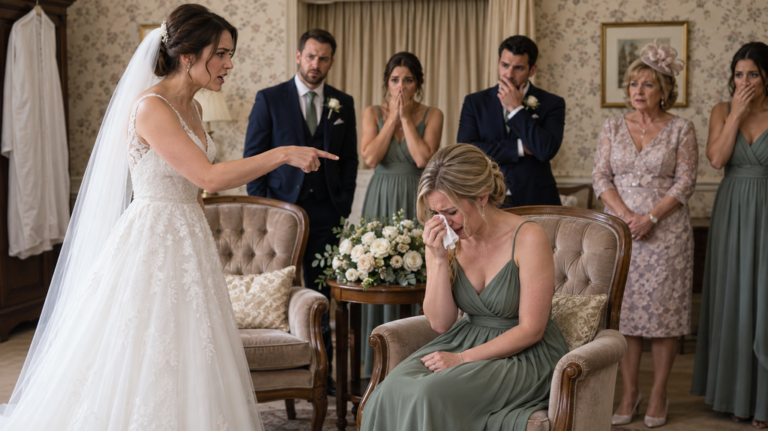
Eventually, the widow decided to tell her mother-in-law that she had changed her mind. She carefully explained that she was not trying to erase her husband’s memory or disrespect the promise they had once made. She simply believed that the circumstances had changed so dramatically that she needed to make the decision based on what she felt was best for her baby. Her mother-in-law did not take the news well. She became furious and accused the widow of breaking a sacred promise to her son. She argued that the baby was the last living connection she had to him and that refusing to use his name felt like another loss. The widow understood the pain behind those words, but she was hurt by the suggestion that choosing another name meant she loved her husband any less. She reminded her mother-in-law that she had lost her husband too and that she was the one who would be raising their child.
The confrontation became increasingly emotional as both women explained their positions. The mother-in-law believed the promise should never have been changed, especially after her son’s death. The widow believed that promises made before such a devastating event could not always account for what life would look like afterward. She told her mother-in-law that she planned to keep her husband’s memory alive in many other ways. Her child would grow up hearing stories about their father, seeing photographs, learning about his personality, and understanding how much he had been loved. She wanted the baby to know that their father had been an important part of their story without making the child feel responsible for carrying his identity. Although the mother-in-law remained angry, the widow refused to let guilt determine the decision. She understood that grief could explain her reaction, but she did not believe grief should decide the child’s name.
In the end, the widow stood by her decision despite knowing that it could permanently affect her relationship with her mother-in-law. She chose a different first name for the baby while keeping a meaningful connection to her late husband’s family through the child’s middle name. For her, this was a way of honoring the past while still allowing her child to have a future that belonged to them. She knew her husband would always be part of their lives, regardless of what appeared on the birth certificate. The disagreement was painful, and she hoped her mother-in-law would eventually understand that changing the name was never about forgetting her son. It was about recognizing that the baby was a new person, not a replacement for someone who had passed away. She could honor her husband’s memory without allowing an old promise to determine the entire identity of the child she was now raising.
Read Story…
AITA for changing my babies name despite promising my dead husband’s family I’d name the child after him?
I lost my husband due to covid a when I was about 3 months pregnant. Don’t let that affect your judgment against me though. After he died my MIL thought it would be a great idea to name the baby after him (if it was a boy), which I agreed with at the time because I was just so overwhelmed with emotion. She said it would be like he’s still there in a way.
When my son got here, even though I still wanted to honor him, I’m not so sure I wanted to name the baby after my husband. I feel like that’s just sticking to the past, and that my baby should be his own person. So I gave him a different name on his birth certificate.
When I made the announcement on Facebook that baby “Lucas” had arrived, I started getting confused comments from my mil. She called me a few hours later, asking why I had broken the promise. I told her my reasoning, and that I just wanted to move on in a healthy way. That I felt like calling my husband’s name when referring to my son would hurt me and make the process harder.
Now, she didn’t yell at me. But she did say how disrespectful it was to my husband to not include him in my sons life in some way. She also brought up the fact that I had not even told her or his extended family that I was changing my mind. I told her personally that I felt like I didn’t need to, as she was just my mil, not my husband.
Thats when she raised her voice. Said she had been waiting all this time to meet her grandson and now she doesn’t even want to see him. I said that was fine and hung up. I do feel bad that I didn’t honor the promise but I feel like I don’t owe her or anyone anything. AITA?
Again, please judge bluntly and honestly despite my loss.
Edit: I did not go months without telling her I changed my mind as some of you are implying. I changed my mind a little bit after he was born.
Some of you guys are truly terrible. Telling me my husband must’ve regretted marrying me, and that I deserved to lose him? When I said be blunt, that’s not a pass to be rude to me. I hope you get whatever sorted in your lives that makes you want to talk to strangers in such a way.
Widow Faces Pregnancy Alone After Losing Her Husband Before Their Baby’s Arrival
When this widow discovered she was pregnant, the news brought emotions she never expected to experience all at once. She was excited about becoming a mother, but the happiness was overshadowed by the devastating reality that her husband would never be there to meet their child. He had passed away before they could begin the family they had planned together, leaving her to face pregnancy, appointments, preparations, and an uncertain future alone. Before his death, the couple had talked often about having children and had imagined what parenthood would look like. They had discussed baby names, nursery ideas, family traditions, and the kind of parents they hoped to become. Now, every one of those dreams felt bittersweet because she was living them without him.
Advertisement
One particular conversation kept returning to her mind. Before his death, she and her husband had agreed that if they ever had a child, they would name the baby after him. At the time, the promise seemed simple and loving. Neither of them imagined that she would someday be making the decision without him. They had assumed they would stand together in a hospital room, hold their newborn, and proudly announce the name they had chosen. Because the promise had been made during a happy period of their marriage, she never questioned it. After losing him, however, everything surrounding that promise began to feel different.
Her husband’s death left a huge emptiness in her life. She struggled with ordinary tasks because everything reminded her of him. There were moments when she instinctively reached for her phone to tell him something about the pregnancy before remembering that he was gone. Doctor appointments were especially difficult because she saw couples arriving together while she sat alone. She tried to focus on the baby, but grief often arrived unexpectedly. One moment she would be smiling about the future, and the next she would be crying because her husband would never get to experience the moments they had once dreamed about.
Her mother-in-law was experiencing her own devastating grief. Losing a child was something she never imagined having to endure, and she struggled to accept that her son would never return. When she learned that her daughter-in-law was pregnant, however, the baby became a source of hope. She began looking forward to becoming a grandmother and saw the unborn child as a connection to the son she had lost. The pregnancy gave her something positive to focus on during an otherwise painful period.
Because of that, the mother-in-law became deeply attached to the promise about the baby’s name. She believed the child should carry her son’s name as a way of keeping his memory alive. Whenever the pregnancy came up in conversation, she spoke confidently about the name they had chosen. She told relatives how meaningful it would be and imagined hearing her son’s name every time she called her grandchild. The widow understood why the idea was so emotional for her mother-in-law, so she did not immediately challenge it.
At first, the widow even considered keeping the promise simply because she did not want to cause additional pain. She thought that perhaps the name could become something positive for everyone. Maybe hearing her husband’s name would help the family feel connected to him. Maybe the child would eventually appreciate knowing they had been named after their father. She went back and forth in her mind for weeks, unable to determine what decision would create the least amount of pain.
But as the pregnancy progressed, her feelings began to change. She started thinking about the baby as an individual rather than simply as her husband’s child. She imagined the child growing up, developing a personality, making friends, choosing a career, and creating a life of their own. She began worrying that carrying their father’s name might create an invisible expectation. What if relatives constantly compared the child to their father? What if everyone expected them to behave like him? What if the child eventually felt that their identity belonged more to a deceased parent than to themselves?
Those questions became impossible for her to ignore. She still wanted her child to know everything about their father. She planned to keep photographs, tell stories, save meaningful belongings, and explain how excited he had been about becoming a parent. She wanted the child to grow up understanding that their father had loved them before they were even born. But she began believing that remembering someone and naming a child after them were two different things.
She also realized that the original promise had been made under circumstances that no longer existed. When she and her husband discussed the name, they had assumed they would raise the child together. They had never imagined that he would die before the baby was born. They had never discussed what would happen if one of them were gone. The promise had been based on a future that both of them believed they would share, and now she was being asked to follow it while living a reality neither of them had anticipated.
Eventually, she chose a different name. It was not a random decision. She selected a name that carried personal meaning and represented a new beginning. She also considered using a middle name connected to her husband’s family so that there would still be a clear connection to him. She believed this approach would allow her to honor his memory without making the child’s first name a permanent memorial.
Before making the announcement to the rest of the family, she decided that her mother-in-law deserved to hear the news privately. She invited her over and carefully explained that she had changed her mind. She emphasized that she loved her husband and would never stop honoring him. She also explained that the decision was not meant to disrespect anyone. She simply felt that she needed to choose a name based on the child she was bringing into the world rather than the tragedy the family had experienced.
Her mother-in-law was devastated. She immediately reminded the widow of the promise she had made to her son. She said that her son had trusted her to honor his wishes and that changing the name after his death was deeply disrespectful. The widow tried to explain that she had not broken the promise out of anger or resentment. She had simply reached a point where she no longer believed it was right for the baby.
The mother-in-law became increasingly emotional. She said the baby’s name was one of the last things she had left connecting her to her son. She admitted that hearing his name spoken by her grandchild was something she had been looking forward to since the pregnancy was announced. To her, changing the name felt like losing another part of her son.
The widow understood the pain behind those words, but she was also deeply hurt. She had lost her husband too. She had lost the person she expected to raise the baby with, and she was facing motherhood without him. She felt that her mother-in-law sometimes forgot that she was grieving just as deeply. The difference was that she also had to continue functioning every day because she was responsible for the baby growing inside her.
The argument eventually became more personal. The mother-in-law accused her of moving on too quickly and suggested that refusing to use her son’s name meant she was already trying to separate herself from him. The widow was stunned. She explained that choosing another name did not mean she had forgotten her husband. She would always love him, and she would always tell their child about him.
She then explained why she believed the baby deserved an identity of their own. She did not want the child to grow up feeling like a replacement for their father. She wanted them to be allowed to become whoever they naturally were. They could inherit their father’s kindness, humor, interests, or personality without being expected to become him. To her, that distinction was extremely important.
Her mother-in-law disagreed. She believed carrying the father’s name would strengthen the child’s connection to him. She said that family names represented history and legacy. The widow acknowledged that perspective but argued that legacy could be preserved through stories and traditions rather than placing the responsibility entirely on a child.
The disagreement quickly spread throughout the family. Some relatives supported the mother-in-law and argued that a promise to someone who had passed away should be treated as permanent. Others believed that the widow had the final say because she was the baby’s mother and would be raising the child. The widow hated that the private disagreement had become a family discussion.
She began feeling guilty even though she still believed she was making the right decision. She wondered whether keeping the original name would make things easier. Perhaps her mother-in-law would be happier. Perhaps there would be less family conflict. But she knew that if she chose the name only because she was afraid of upsetting others, she might regret it for the rest of her life.
She spent several nights thinking about what her husband would have wanted. She remembered how excited he had been about becoming a father. She remembered the conversations they had shared and how much he had talked about giving their child a happy childhood. She could never know what he would think about her decision now. That uncertainty was painful, but she eventually realized that she could not make a parenting decision based on an answer she could never receive.
The widow decided to stand by her choice. She told her mother-in-law that she understood her feelings and would never prevent her from sharing memories of her son with the baby. She promised that the child would grow up knowing who their father was and how much he had been loved. But she also made it clear that the final decision about the baby’s name belonged to her.
As the due date approached, the tension remained. The mother-in-law became distant, and some family members stopped speaking openly about the name. The widow tried to ignore the conflict and focus on preparing for the birth. She bought baby clothes, organized the nursery, attended appointments, and tried to imagine what life would be like once the baby arrived.
When the baby was finally born, the widow experienced a powerful mixture of joy and sadness. Holding her child for the first time was one of the happiest moments of her life, but she immediately wished her husband could have been there. She looked at the baby and thought about the father who had never had the chance to hold them. She quietly promised that she would make sure the child knew exactly how much their father had loved them.
She gave the baby the name she had chosen. The middle name still carried a connection to her husband’s family, which she hoped would eventually help everyone see that she had not erased his memory. She wanted the name to represent both the past and the future—a reminder of where the child came from while allowing them to grow into their own person.
Her mother-in-law initially struggled to accept the decision. She remained hurt and angry, and their relationship became distant for a while. However, when she eventually met the baby, her emotions became complicated. The child reminded her so strongly of her son that the anger became difficult to maintain. She still wished the baby carried his exact name, but she could not deny the love she felt for her grandchild.
Over time, the widow encouraged her mother-in-law to become part of the baby’s life. She wanted her child to know their father’s family and hear stories that only their grandmother could tell. She believed that preserving those relationships was more important than winning an argument about a name. She hoped that eventually her mother-in-law would understand that the decision had never been about rejecting her son.
The mother-in-law slowly began sharing stories about her son. She talked about his childhood, his favorite activities, his personality, and the things that made him laugh. The widow realized that these stories were creating a much stronger connection between the baby and their father than a name alone ever could have done.
The widow also began to feel more confident about her decision. She understood that grief could make people hold tightly to symbols because symbols sometimes feel easier to control than loss itself. For her mother-in-law, the name represented her son. For the widow, however, the child represented a future that still needed to be protected. Both perspectives came from love, even though they led to completely different choices.
Eventually, the family began accepting the baby’s name, although not everyone agreed with the decision. The mother-in-law never completely forgot the promise, but she eventually stopped treating the widow as though she had betrayed her son. She realized that the baby was not responsible for preserving her grief and that her son’s memory could survive without being written directly onto the child’s birth certificate.
The widow continued honoring her husband in countless ways. She kept his photographs, told their child stories about him, celebrated meaningful dates, and preserved memories that could one day be passed down. She wanted her child to know that their father had been a loving husband who had dreamed about becoming a parent. But she also wanted the child to know that they were never expected to replace him.
Looking back, the widow believes the experience taught her that promises are sometimes more complicated than people realize. A promise made during one stage of life may become difficult to fulfill when circumstances change completely. She does not believe changing her mind meant she loved her husband less. Instead, she believes she was trying to make the best decision possible for the child he left behind.
In the end, the widow chose to honor both her past and her future. She kept her husband’s memory alive without giving the baby the responsibility of carrying his identity. Her mother-in-law may never fully agree with the decision, but their relationship slowly became more peaceful. The widow hopes that one day her child will understand why she made that choice. She wants them to know that their father’s memory was never erased and that they were never meant to replace him. They were simply a new life born from a love that ended far too soon—and they deserved the freedom to create a story of their own.